

The original 5 core shades:
-
Noir - classic black
-
Rouge H - a deep burgundy-red with brown undertones
-
Étoupe - a warm leaning neutral taupe (features white contrast stitching)
-
Gold - a warm caramel-brown, honey, or dark beige shade with subtle orange undertones, rooted in the brand's equestrian saddle-making history
-
Orange H - famous for its rich, balanced warmth (and the iconic signature Hermès orange)

In the 1920s, Hermès boxes were cream pigskin, and in the 1930s they shifted to mustard yellow. Due to severe material and dye shortages in 1942, suppliers ran out of traditional colours and only had an unpopular, bright citrus orange left that other brands had rejected. Hermès adopted the colour out of necessity, later pairing it with a dark chocolate brown Bolduc ribbon in 1949. What started as a wartime compromise became a globally recognised branding trademark, winning a packaging design award in 1994. It doesn't even have an exact Pantone equivalent, because Hermès owns the proprietary formula.

These 5 colours were later joined by:
-
Blanc - a signature, cool and crisp white
-
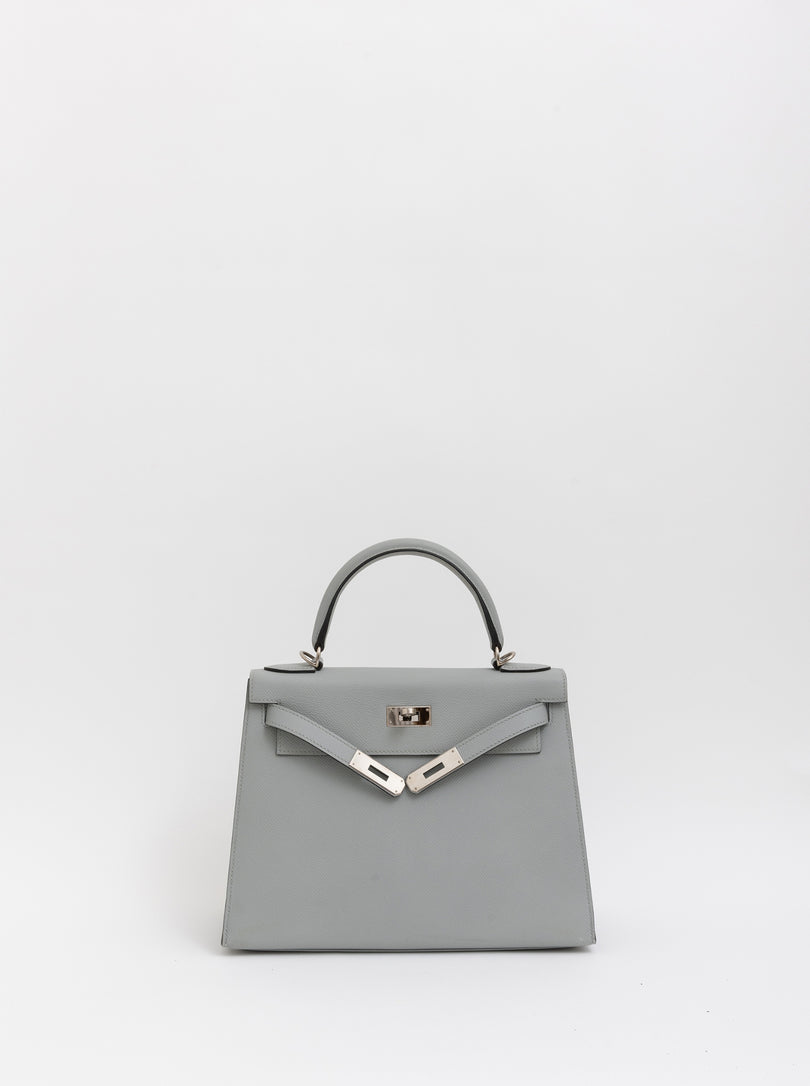
Étain - French for "tin", a cool-toned medium grey (features tonal/matching stitching)
-
Rouge Casaque - classic true, saturated tomato red (inspired by traditional equestrian silks and jackets, i. e. jockeys' casaques)
-
Craie - French for "chalk" a versatile, soft, powdery off-white with subtle grey, beige and greige undertones
-
Bleu Nuit - French for Night Blue it is one of Hermès darkest, deepest navy blue shades
which are frequently re-released or produced on a more consistent basis.

Leather Variations:
The exact final appearance of any single colour can vary depending on the specific leather grain or skin texture. For example, when it comes to holding colour, resisting fading and maintaining vibrancy or structure over time, some leathers stand out based on how they absorb dyes, and handle wear.
- Epsom - as a pressed, embossed calfskin leather with uniform grain and rigid structure, Epsom is widely considered one of the best for holding both light and dark colours evenly, and long term as it resists fading, is less prone to colour transfer, and doesn't distort the colour as the bag ages.
- Chévre - e.g. Chévre Mysore; is a resilient goatskin leather which has a natural lustre and fine grain that is exceptional at taking and holding vivid, saturated and bright colours like greens and pinks, and metallic shades, without loosing richness or showing premature wear.
- Togo - a natural drummed calfskin, Togo is famous for aging gracefully and maintaining depth of colour, and is a preferred leather for Noir, Gold and neutrals like Craie and Étoupe.
- Swift - While more delicate and prone to scuffs, Swift is celebrates for absorbing dyes with intense luminosity and keeping bold colours looking vivid and jewel-toned.

What is the hardest Hermès colour to get ?
The hardest Hermès colours to acquire come down to a mix of high-demand classic core neutrals like Noir, Gold, Craie & Nata (a warm, yellow-toned light beige) and Étoupe, alongside ultra-rare limited-edition seasonal pastels.
Why are the core neutrals so hard to come by ?
Paradoxically, while colours like Noir and Gold are foundational to the Hermès brand and are produced regularly, the demand vastly outpaces supply. Because they go with everything and hold their value for resale, boutique allocations for these classic colours are most often reserved for VIP clients.

Specialty, seasonal & limited edition colours:
Hermès introduces new shades each Spring/Summer and Fall/Winter collection, which are (generally speaking) only produced for a short window – 2 to 3 years – before retiring them. Older "discontinued colours" sometimes return, but your best bet is to search for them pre-loved.
Some hues of note include:
-
Bleu Brume - meaning Blue Haze, this is a dreamy, airy pale blue with grey undertones
-
Mauve Sylvestre - a dynamic, cool, powdery mix of dusty lilac and soft pink that shifts depending on the lighting (appearing more pink in bright sun and leaning into lilac in shadows) and the leather (looks crisp, matte and muted in Epsom, appears softer and more pink in Clémence or Swift)
-
Guimauve - introduced as part of Hermès' Spring/Summer 2026 collection, French for "marshmellow", Guimauve is a milky, pastel lavender pink that sits between a soft pink and a powdery lilac with cool undertones.
-
Bai Brun - a deep, radiant, rich-toned chocolate brown. The name bai brun translates from French to the dark brown coat of a bay horse, paying homage to Hermès' historical roots in saddlery
-
Carbone - introduced in 2026, Carbone is a dark charcoal-to-black shade with a cool, subtle blue or muted undertone. A modern, softer alternative to classic black with a moody grey look
-
Rose Sakura - named after the Japanese sakura cherry blossom, it is a soft, milky, and luminous baby pink with subtle cool or lilac undertones
-
Beige Marfa - a neutral beige introduced in the Fall/Winter 2023 collection, "Astonishing Hermès", inspired by the dry, natural landscape surrounding Marfa, Texas
-
Rose Azalée - a vibrant, medium-bright pink with warm coral undertones, inspired by the vivid coral-pink colour of azalea flowers. Rose Azalée sits between a true bubblegum pink and a warm coral-salmon, giving it a lively, cheerful pop of colour without leaning neon. Introduced around 2015, it is a very popular colour for Special Order (HSS) pieces

Special-Order (HSS) & Exotic Hues: Matte Himalayan Niloticus Crocodile (featuring a white-to-grey gradient) is widely considered the ultimate holy grail, making it virtually impossible to acquire at retail, although they are sometimes available via pre-loved.
Shop Hermès now.
dedicated to our in-house Hermès expert, Anthony Micallef.
all images c/o Pinterest.